Exhibition stand
design process
From a one-page brief to dismantling. A nine-stage workflow with the deliverables, timelines, and decisions at each stage.
Built for brands you may already know.
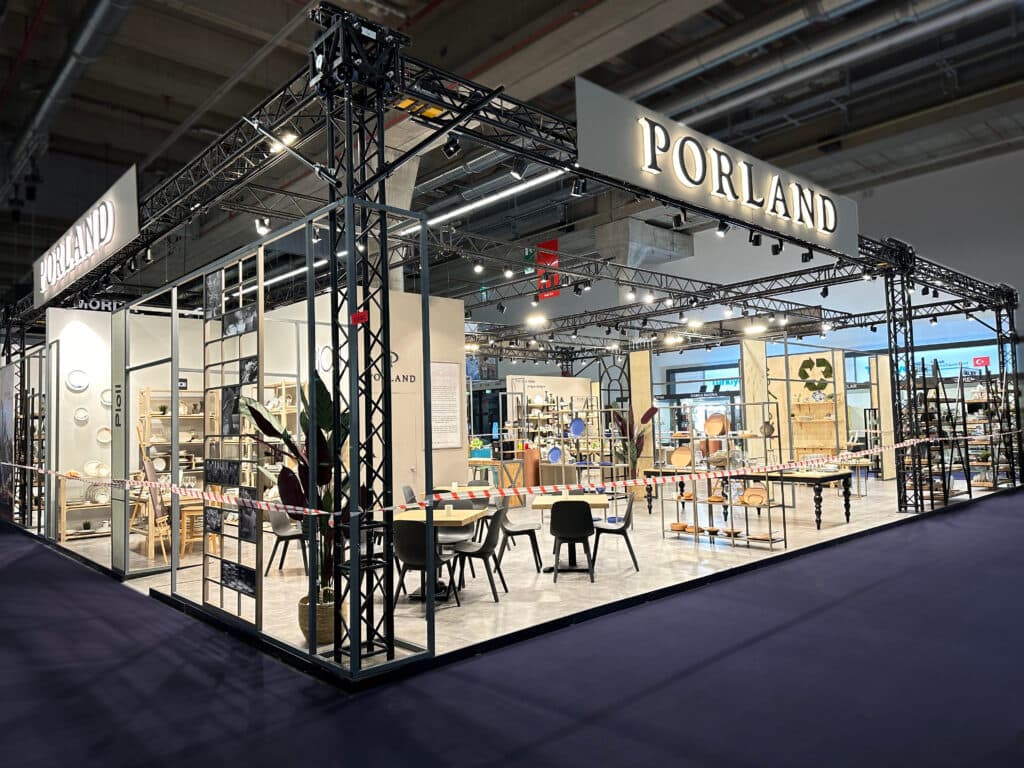
Porland
Ambiente Frankfurt 2024 · 365 m²

Pioli
EquipHotel Paris

Youth House
COP29 Baku · 1200 m²

Baykar
Marrakech Air Show · 250 m²
Design: Istanbul Studio · Manufacture: Kağıthane HQ · Single senior project manager
Since 2014 · Operating in 31 countries · 5 global offices
Nine stages, eight to fourteen weeks.
01 — Brief
Week 0
Exhibitor and builder align on objectives, audience, budget, location, and brand. Output: signed brief and project timeline.
02 — Concept design
Weeks 1–2
2–3 visual concepts in 3D rendering with floor plans and perspective views. Output: concept presentation deck.
03 — Refinement
Weeks 2–4
Selected concept iterated through up to two revision rounds. Output: final approved design.
04 — Technical drawings
Weeks 4–6
Manufacturing-ready CAD with all dimensions, materials, electrical layout. Output: build pack for workshop.
05 — Production
Weeks 6–10
Structural fabrication, graphic printing, furniture sourcing, pre-build. Output: complete stand ready for freight.
06 — Logistics
Weeks 10–11
Freight to venue with customs clearance. Output: stand components arrive at event hall on schedule.
07 — Installation
Build days (2–4 days)
Exhibition stand installation is the stage where every earlier decision is either vindicated or paid for — the build-up window, crew sizing and what goes wrong on day one have their own guide at /guides/exhibition-stand-installation. On-site assembly by a certified crew, project manager present, working to the venue's build-up slot. Output: fully built, tested stand at show open.
08 — Show days
3–5 days
Standby crew available for repairs, replacements, or graphic changes during the event.
09 — Dismantling
1–2 days after closing
Disassembly, reusable elements returned to warehouse, disposables recycled per venue rules. Output: empty floor space, post-event report.
Process questions answered.
How does the exhibition stand design process work?
The process has six stages. (1) Brief — exhibitor defines objectives, budget, size, and brand guidelines. (2) Concept design — 2–3 visual concepts in 3D, usually delivered within 5–10 working days. (3) Refinement — selected concept is iterated based on feedback. (4) Technical drawings — manufacturing-ready CAD with materials specified. (5) Production — fabrication, graphic printing, pre-build verification. (6) Installation and dismantling at the venue. The full cycle from signed brief to installation typically takes 8–14 weeks.
What do I need to provide for the initial design brief?
A complete brief contains: target stand size in square metres, event name and dates, allocated floor location and corners (island, peninsula, in-line), budget range, top three products or services to feature, brand guidelines (logo, colours, fonts), required functional zones (meeting room, demo zone, storage, lounge), expected staff count on stand, and any structural constraints from the venue (hanging banner permission, electricity load, ceiling height). The more detail you provide, the more accurate the initial concepts will be.
How many design revisions are included?
Industry standard is two rounds of revisions on the selected concept. The first round addresses major changes (layout, structural elements, key zones). The second round handles refinements (materials, lighting, finishes). Additional revisions are possible but add lead time. Build a clear list of priorities before the first revision call — vague feedback like 'make it more premium' produces unfocused iterations.
What is included in a 3D concept presentation?
A full 3D presentation includes: photorealistic renders from 3–4 angles, a top-down floor plan with dimensions, a perspective view at human eye level showing how visitors experience the stand, material and finish callouts, a graphic layout showing how brand visuals are applied, and an itemised budget breakdown matching the design. Some builders also produce 360° walkthroughs or virtual reality previews for large projects.
Can I see physical samples of materials before approving?
Yes — request material samples for any finish you haven't worked with before. Common samples to request: graphic print quality on the actual substrate (digital print on flex, lambda print on rigid panel, frosted vinyl), flooring samples, lighting demos (LED colour temperature varies dramatically), and key structural materials. Trustworthy builders maintain a sample library and can ship cuts within a week.
How does the technical drawing stage differ from concept design?
Concept design is visual and persuasive — it shows the exhibitor what the stand will look like. Technical drawings are precise and manufacturing-ready — every dimension, joint, fastener, and material is specified for the workshop floor. Technical drawings include floor plans with electrical layouts, structural sections, graphic positioning at 1:1 scale, and a bill of materials. This stage takes 2–3 weeks and is non-negotiable; skipping it leads to on-site assembly problems.
When does production begin?
Production begins immediately after technical drawings are signed off — typically 5–7 weeks before the event. Structural elements (aluminium frames, MDF walls) are fabricated first. Graphics print 2–3 weeks before the show. Pre-build at the workshop happens 1–2 weeks before freight to verify the stand assembles correctly. Freight to the venue ships 5–10 days before show open, depending on distance and customs requirements.
What happens on-site at the venue?
Installation typically takes 2–4 days for a stand under 100 sqm, 4–6 days for larger or double-deck stands. Day 1: floor marking and base structure. Day 2: walls, beams, and main graphics. Day 3: lighting, AV, furniture, and final detailing. Day 4: client walkthrough and snag list resolution. A project manager from the builder is on site throughout. After the show, dismantling takes 1–2 days; venues typically allocate strict overnight windows for this.