Exhibition stand
materials
What an exhibition stand is built from — structural framing, wall panels, graphics, lighting, and flooring. How each material affects cost, weight, and sustainability.
Built for brands you may already know.
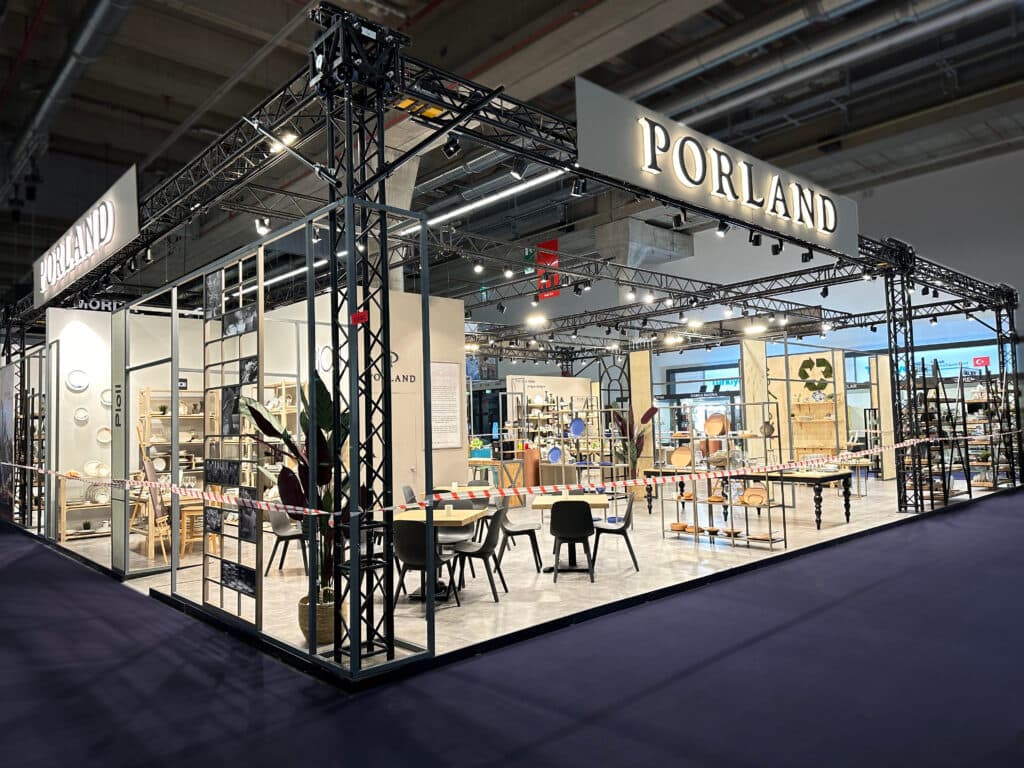
Porland
Ambiente Frankfurt 2024 · 365 m²

Pioli
EquipHotel Paris

Youth House
COP29 Baku · 1200 m²

Baykar
Marrakech Air Show · 250 m²
Design: Istanbul Studio · Manufacture: Kağıthane HQ · Single senior project manager
Since 2014 · Operating in 31 countries · 5 global offices
The nine common stand materials.
Exhibition stand construction materials get chosen for one of three reasons: what they cost, what they weigh, or what happens to them after the show. The table below compares the nine that come up in almost every quote, so you can see which trade-off you are actually buying before a supplier makes the choice for you.
| Material | Primary use | Lifespan | Sustainability |
|---|---|---|---|
| Aluminium T-slot framing | Structural — modular reusable systems | 10+ years | Fully recyclable, primary structural choice |
| Steel framing | Structural — double-deck and heavy loads | 15+ years | Recyclable but heavier freight emissions |
| MDF (FSC-certified) | Wall panels, counters, cabinetry | Single event typically | Recyclable in composite-wood streams |
| Honeycomb composite | Lightweight wall panels | 3–5 reuses | Reusable, lower freight weight |
| Polyester tension fabric | Seamless graphics | 3–5 reuses | Recyclable in textile streams (PVC-free) |
| Rigid PVC graphics | Budget direct-print panels | Single event | Difficult to recycle, avoid for ESG |
| LED lightboxes | Illuminated graphics | 5+ reuses | E-waste at end of life |
| Vinyl flooring | Premium flooring on raised platform | 2–3 reuses | Limited recyclability |
| Acrylic / plexiglass | Transparent elements, signage | 2–5 reuses | Recyclable |
Materials questions answered.
What materials are used to build exhibition stands?
Six main material categories. (1) Structural framing — aluminium T-slot extrusions (modular) or fabricated aluminium and steel (custom). (2) Wall panels — MDF, plywood, or honeycomb composite. (3) Graphics — fabric tension prints, rigid PVC panels, or direct-print on substrate. (4) Lightboxes — LED backlit translucent panels for illuminated graphics. (5) Flooring — raised platforms with carpet, vinyl, wood-effect laminate, or rubber. (6) Detailing — acrylic for transparent elements, metal for accents, glass for premium reception areas.
Why is aluminium the dominant structural material?
Three reasons. (1) Strength-to-weight ratio — aluminium framing supports walls and beams without overloading venue floor weight limits. (2) Modularity — T-slot extrusions accept panels, brackets, lighting, and accessories without welding or drilling, enabling reconfiguration. (3) Reusability — aluminium has a service life of 10+ years and is fully recyclable. Steel is occasionally used for double-deck stands where load capacity is critical, but it's heavier, more expensive to ship, and harder to disassemble.
What is MDF and why is it used?
MDF (Medium Density Fibreboard) is engineered wood made from compressed wood fibres and resin. It's used for wall infill panels, counters, and cabinetry on exhibition stands because it's flat, paintable, accepts vinyl wraps, and is cheap relative to plywood or solid wood. Standard MDF is single-use and not particularly sustainable; FSC-certified MDF from managed forests is the responsible choice and required for most ESG-reporting exhibitors. Moisture-resistant MDF is used in food and humid-climate applications.
What is the difference between fabric and rigid graphics?
Fabric graphics use dye-sublimation printing onto polyester tension fabric stretched over an aluminium frame. They produce a seamless, premium look, ship rolled up in small cases, and are increasingly preferred for sustainability (no PVC, lower freight weight). Rigid graphics print directly onto PVC or rigid panels — they're cheaper, faster to produce, but heavier to ship, more wasteful, and visible panel seams are harder to hide. Fabric is the default for premium stands; rigid is the default for budget builds or temporary graphics that change between events.
What flooring options are available for exhibition stands?
Five common options. (1) Raised platform with carpet — most common, gives visual lift, hides cables, sound-insulates. (2) Raised platform with vinyl — premium look, easier to clean, durable. (3) Wood-effect laminate — premium feel, often used for hospitality zones. (4) Rubber — used for industrial or product-display areas where heavy equipment sits on the floor. (5) Direct-to-venue (no platform) — cheapest, used for budget shell-scheme stands where the venue carpet is already adequate. Platform depth typically 5–10 cm.
Are stand materials recyclable?
Aluminium framing is fully recyclable and most builders return it to warehouse stock for reuse. FSC-certified MDF is recyclable in regions with composite-wood recycling streams (mostly Europe). Fabric graphics can be recycled in textile streams but most end up in general waste. PVC graphics are difficult to recycle and most end in landfill — this is why ESG-conscious exhibitors specify PVC-free alternatives. LED lighting must go through electrical waste streams. Always ask the builder for a materials breakdown with recyclability percentages.
Which materials make a stand look premium?
Five details that signal premium. (1) Seamless fabric graphics over rigid panels — no visible seams reads as expensive. (2) Backlit lightboxes instead of front-lit graphics — depth and luminosity are visually associated with quality. (3) Real materials over imitations — actual wood veneer instead of wood-effect laminate, real stone or concrete instead of printed image. (4) Hidden lighting — recessed LED strips, no visible fixtures. (5) Premium flooring — vinyl or wood-effect over standard event carpet. The cumulative effect of these five details often moves a stand from mid-tier to premium perception without doubling the budget.
What weight constraints do venues impose?
Venue floor load limits vary widely. Major European trade fair halls (Messe Frankfurt, Fiera Milano) typically allow 500–1,500 kg/sqm. Tent or temporary structures (used at outdoor expos) may limit to 200–400 kg/sqm. Ceiling load limits constrain hanging banners and lighting rigs — typically 50–250 kg per anchor point. Heavy double-deck stands and large LED video walls require structural engineering review and signed venue approval. Always confirm load limits in the venue technical pack before designing.